Pokazywanie postów oznaczonych etykietą akropol. Pokaż wszystkie posty

wtorek, 24 maja 2022

Ateny subiekywnie - wstęp

Ateny są miastem kontrastów. 

Zdecydowanie. Poczynając od starożytnych  ruin i wykopalisk, przez niesamowite kolekcje muzealne, aż po dzielnice "bohemy bez nazwiska". Wystarczy skręcić w "inną uliczkę" i już wielkie miasto wygląda jak wielka wieś.


Poniższy post jest mocno subiektywny, oddaje bowiem jedynie moje odczucia, niezgodne z opiniami innych (zwłaszcza mojej, kopniętej starożytnością, siostry). Te moje odczucia staram się jednak przedstawić z subiektywnym komentarzem. Bo znajdźcie mi kogoś, kto przyzna, ze Akropol jest niewarty poświęceń (chyba że w listopadzie, kiedy jest szansa na mniejszy tłum), a najpiękniejsze wykopaliska w Atenach to Agora Ateńska i Hefajstejon (który notabene miałyśmy ominąć).

poniedziałek, 23 maja 2022

Ateny subiektywnie - Akropol i okoliczne wykopaliska

Mogę sobie Akropolu nie lubić. Mogę się denerwować na tłumy. Mogę go mieć na prywatnej liście "Nigdy więcej", ale faktem pozostaje, że znajduje się na wszystkich możliwych listach "Must see", "top 10", "top 5". Nawet na wielu bucket lists, czyli "zobaczyć przed śmiercią". Moje zdanie jest inne, ale ono w tym tłumie średnio się liczy :) 

piątek, 20 maja 2022

[UNESCO] - Teatr Dionisosa w Atenach

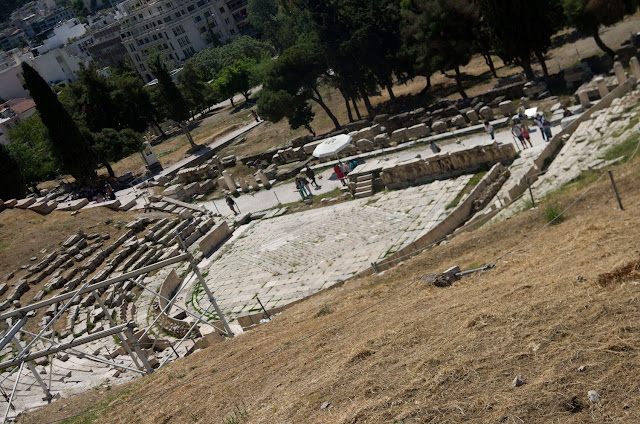
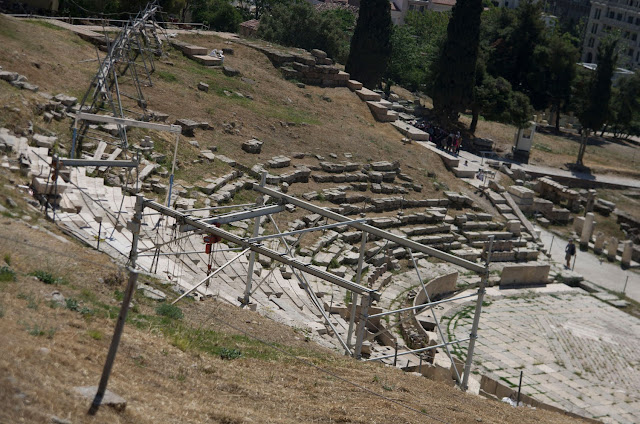
Teatr Dionisosa w Atenach znajduje się na zboczach Akropolu i jego zobaczenie wymaga biletu wstępu. Czy warto, czy nie - to już zostawiam Wam. Tutaj tylko przeklejam tekst z UNESCO, aby wszystko było w jednym miejscu :)


Niestety, w mojej prywatnej opinii jest to powiększona piaskownica, w której dzieci bawiły się kamyczkami. (tak, wiem, ze stoi za tymi kamyczkami, kupę historii i wiele lat. A nawet tysięcy lat. Nie zmienia to jednak faktu, że teatr w Epidauros, również znajdujący się na liście UNESCO, zapiera dech w piersiach, a tu.. no cóż, kupka kamieni.


On the east part of the south side of the Acropolis stand the imposing ruins of is theatre, directly north of the Sanctuary of Dionysos. Most of the remains preserved today belong to the monumental structuring of the theatre by the archon of Athens Lycourgos, in the second half of the 4th c. BC. The core of the theatre, however, dates back to the 6th c. BC. That was when the Archaic Sanctuary of Dionysos was erected, while just to the north of it a circular area was levelled, where the cult performances in honour of the god were carried out. These ceremonies were watched by spectators sitting on the hillside, where wooden seats were placed shortly afterwards. This circular area of beaten earth, approximately 25 m. in diameter, formed the first “orchestra” of what was later to become the theatre. It was from the dithyrambic circle dance of the worshippers of Dionysos that tragedy was born.


The theatral structure of the 5th c. BC must have been a simple one, although its precise form has not been fully clarified. The cavea seats were gradually replaced by stone ones, while for the first time staircases were constructed, dividing the cavea into wedge-shaped cunei, and the parodoi of the theatre were delimited. A permanent stone stage was also built, most probably consisting of a plain rectangular building.

During the time of the archon Lycourgos, in the second half of the 4th c. BC, the cavea of the theatre was constructed wholly of stone and extended to the foot of the Sacred Rock, incorporating the section of the Peripatos, the path circling the Acropolis, which passed above the original cavea, and turning it into a diazoma (horizontal passageway). The part of the cavea above this diazoma formed the epitheatre. It is estimated that during this period the theatre had a capacity of approximately 15,000-16,000 spectators. The front tier of seats included 67 marble thrones. The stage was probably a rectangular building with two parascenia. The only major changes during the Hellenistic period must have been to the stage building, which, however, acquired a particularly monumental form in Roman times.

In 86 BC, during Sulla’s invasion of Athens, the stage building suffered considerable damage, as did the whole theatre. In the mid-1st c. AD, in the reign of the Emperor Nero, a new stage of impressive dimensions was constructed. The orchestra was restructured into a semicircle and paved with marble. In the mid-2nd or the 3rd c. AD a high logeion was added in front of the stage building.