Macedonia Środkowa - Grecja kontynentalna
Pokazywanie postów oznaczonych etykietą Unesco w Grecji. Pokaż wszystkie posty
Pokazywanie postów oznaczonych etykietą Unesco w Grecji. Pokaż wszystkie posty
piątek, 2 grudnia 2022

Wieże na Morzu Egejskim - Unesco
The numerous ancient towers scattered across many Aegean islands (Amorgos, Andros, Thasos, Ikaria, Kea, Kythnos, Mykonos, Naxos, Serifos, Sifnos, Skiathos, Paros, Tinos, etc.) and the mainland, constitute a particular type of ancient building with various uses. The vast majority of the towers are dated to around the mid-4th c. BC and up to the first quarter of the 3rd c. BC. Despite their numbers and dispersal, they present common architectural features, such as their circular, square or rectangular plan and their sturdy construction of local stone.
Tracja - Grecja kontynentalna

TRACJA
historycznie: starożytna kraina położona między dolnym Dunajem, Morzem Czarnym, Morzem Egejskim i rzeką Strymon. Obecnie region geograficzny w granicach Bułgarii, Grecji i Turcji, znajdujący się m.in. na terenie Niziny Trackiej. Ze względu na skupisko ludności muzułmańskiej i kulturalne związki z Bułgarią i Turcją, ma zupełnie inny charakter niż pozostała część Grecji kontynentalnej.
Grecja - średniowieczne fortyfikacje (UNESCO - lista oczekujących)
LATE MEDIEVAL BASTIONED FORTIFICATIONS IN GREECE
With the appearance and establishment, in the 15th century, of the use of gunpowder, a new, powerful and destructive means of warfare, city fortification practices changed. Since medieval fortifications were unable to withstand the constantly increasing artillery power, additional defensive structures began to be added to existing fortresses.
niedziela, 29 maja 2022
TEATR W AMPHIAREION
Tekst i zdjęcia: trek.zone
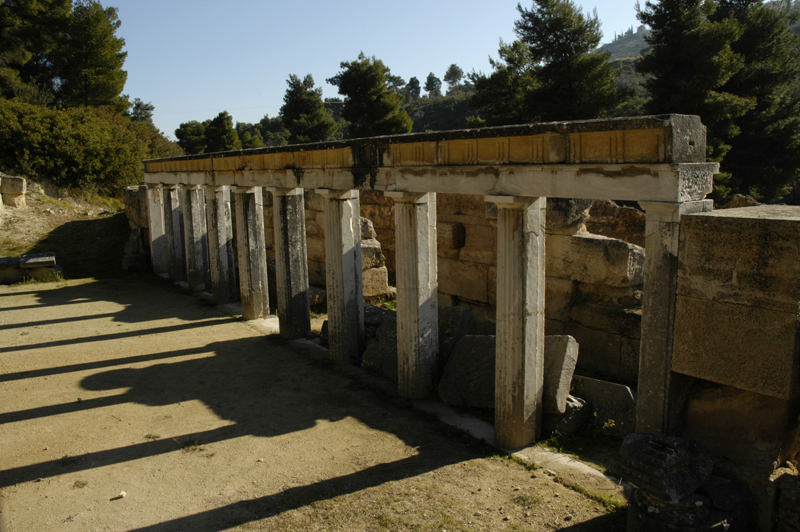
Amphiareion Oropos, położony na wzgórzach 6 km na południowy wschód od ufortyfikowanego portu Oropos, był sanktuarium poświęconym pod koniec V wieku pne bohaterowi Amphiaraos, gdzie pielgrzymi udawali się na poszukiwanie wspaniałych reakcji i uzdrowienia. Odniósł on szczególne sukcesy w IV wieku pne, sądząc po intensywnym budynku na miejscu. Bohater Amphiaraos był potomkiem widzącego Melamposa i początkowo odmówił udziału w ataku na Tebach, ponieważ mógł przewidzieć, że będzie to katastrofa. W niektórych wersjach mitu ziemia otwiera i połyka rydwan Amphiaraos, przekształcając go w chtonicznego bohatera. Dziś miejsce to znajduje się na wschód od nowoczesnego miasta Markopoulo Oropou w gminie Oropos w Attyce w Grecji.
piątek, 20 maja 2022
[UNESCO] - Teatr Dionisosa w Atenach
Teatr Dionisosa w Atenach znajduje się na zboczach Akropolu i jego zobaczenie wymaga biletu wstępu. Czy warto, czy nie - to już zostawiam Wam. Tutaj tylko przeklejam tekst z UNESCO, aby wszystko było w jednym miejscu :)
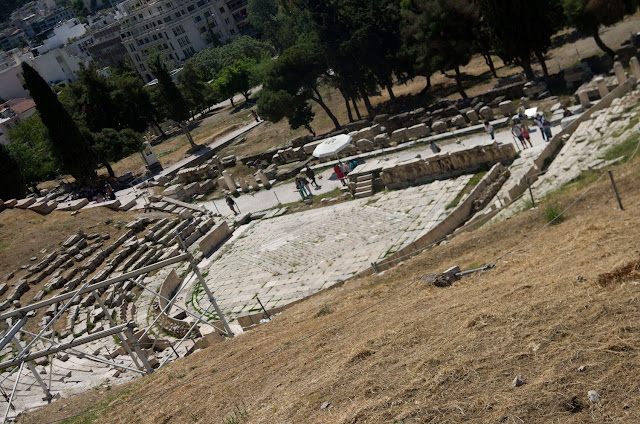
Niestety, w mojej prywatnej opinii jest to powiększona piaskownica, w której dzieci bawiły się kamyczkami. (tak, wiem, ze stoi za tymi kamyczkami, kupę historii i wiele lat. A nawet tysięcy lat. Nie zmienia to jednak faktu, że teatr w Epidauros, również znajdujący się na liście UNESCO, zapiera dech w piersiach, a tu.. no cóż, kupka kamieni.
On the east part of the south side of the Acropolis stand the imposing ruins of is theatre, directly north of the Sanctuary of Dionysos. Most of the remains preserved today belong to the monumental structuring of the theatre by the archon of Athens Lycourgos, in the second half of the 4th c. BC. The core of the theatre, however, dates back to the 6th c. BC. That was when the Archaic Sanctuary of Dionysos was erected, while just to the north of it a circular area was levelled, where the cult performances in honour of the god were carried out. These ceremonies were watched by spectators sitting on the hillside, where wooden seats were placed shortly afterwards. This circular area of beaten earth, approximately 25 m. in diameter, formed the first “orchestra” of what was later to become the theatre. It was from the dithyrambic circle dance of the worshippers of Dionysos that tragedy was born.
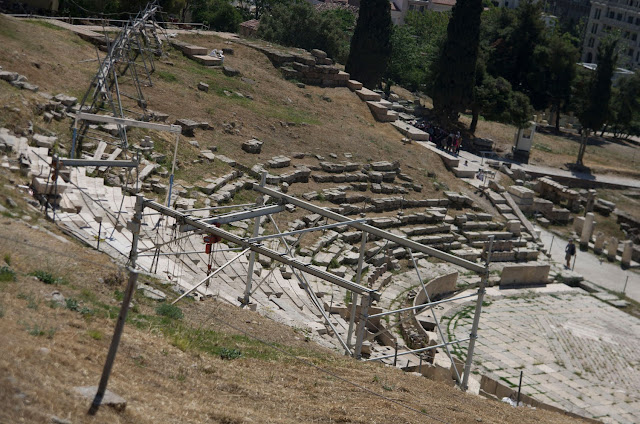 |
The theatral structure of the 5th c. BC must have been a simple one, although its precise form has not been fully clarified. The cavea seats were gradually replaced by stone ones, while for the first time staircases were constructed, dividing the cavea into wedge-shaped cunei, and the parodoi of the theatre were delimited. A permanent stone stage was also built, most probably consisting of a plain rectangular building.
During the time of the archon Lycourgos, in the second half of the 4th c. BC, the cavea of the theatre was constructed wholly of stone and extended to the foot of the Sacred Rock, incorporating the section of the Peripatos, the path circling the Acropolis, which passed above the original cavea, and turning it into a diazoma (horizontal passageway). The part of the cavea above this diazoma formed the epitheatre. It is estimated that during this period the theatre had a capacity of approximately 15,000-16,000 spectators. The front tier of seats included 67 marble thrones. The stage was probably a rectangular building with two parascenia. The only major changes during the Hellenistic period must have been to the stage building, which, however, acquired a particularly monumental form in Roman times.
In 86 BC, during Sulla’s invasion of Athens, the stage building suffered considerable damage, as did the whole theatre. In the mid-1st c. AD, in the reign of the Emperor Nero, a new stage of impressive dimensions was constructed. The orchestra was restructured into a semicircle and paved with marble. In the mid-2nd or the 3rd c. AD a high logeion was added in front of the stage building.
niedziela, 17 kwietnia 2022
Teatr grecki - UNESCO

Starogrecki typ amfiteatru, służący wystawianiu sztuk widowiskowych. Składał się z widowni umieszczonej na stoku naturalnego wzniesienia i orchestry, z czasem schemat wzbogacono o proskenion (odpowiednik dzisiejszej sceny) i zaplecze dla aktorów (skene), a potem o kolejne elementy. Jako wzorzec dla budowli tego typu posłużył ateński teatr Dionizosa. Rozwój greckich budowli teatralnych można rozpatrywać w podziale na okres klasyczny, hellenistyczny i grecko-rzymski.
Teatr grecki stał się wzorem dla budowanych w okresie późniejszym teatrów rzymskich..
niedziela, 4 marca 2018
Delos: sypią się świątynie
Prawie wszystkie obiekty antyczne na Delos wymagają pilnie restauracji - pisze grecka prasa, powołując się na archeologów.
W starożytności na tej wyspie Cykladów wzniesiono okrąg świątynny Apollina- greckiego boga słońca i światła. Według ocen archeologów, prace konserwatorskie i restauracyjne wymagają co najmniej 20 mln euro.
W starożytności na tej wyspie Cykladów wzniesiono okrąg świątynny Apollina- greckiego boga słońca i światła. Według ocen archeologów, prace konserwatorskie i restauracyjne wymagają co najmniej 20 mln euro.
 |
| Fot. Artur Anuszewski |
Subskrybuj:
Posty (Atom)